
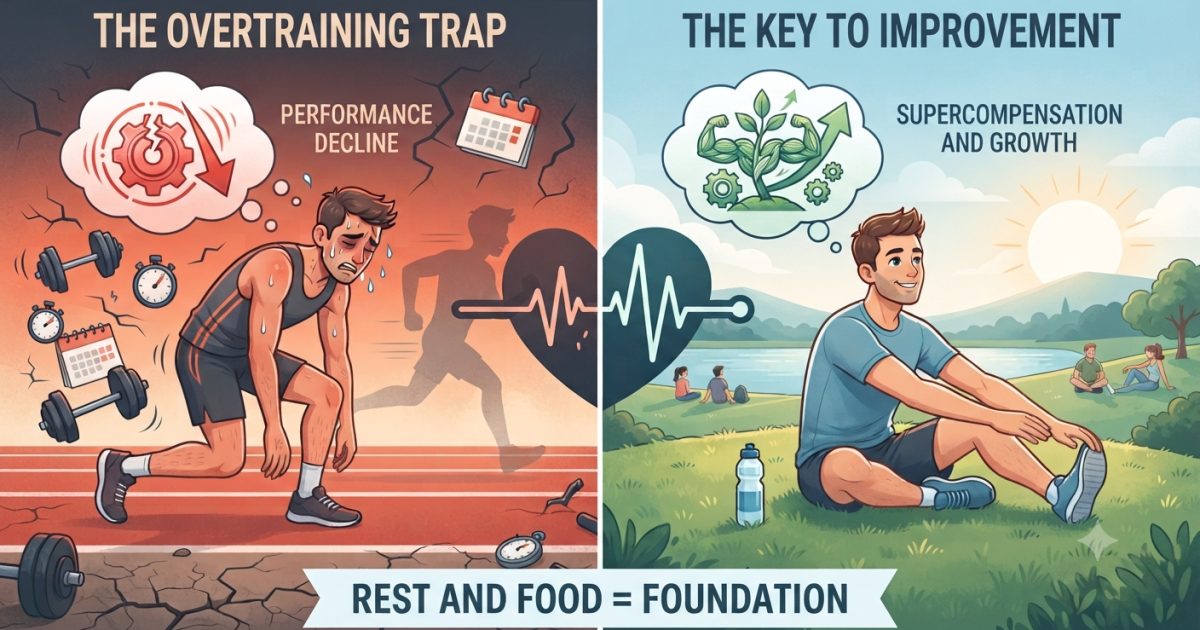
In today's world, we constantly encounter slogans like "no pain, no gain" or "don't let up." For many active individuals, sport has become not only a hobby but also a lifestyle, where every day presents a new challenge. However, this relentless desire for better performance can lead to a trap we call overtraining.
What exactly is overtraining?
Overtraining is not just ordinary fatigue after a workout. It is a state of chronic exhaustion of the body that occurs when the body does not get enough time to recover after repeated high loads. In the short term, we may feel like we are "on a roll," but in the long term, our performance stagnates or even declines.
Symptoms of overtraining include: long-term fatigue, poor sleep quality, irritability, more frequent illnesses, and stagnation or decline in performance.
Rest is not laziness, but a training strategy
Many people perceive days off as "wasted time." The opposite is true, however. It is during rest that so-called supercompensation occurs. The body repairs microtraumas in the muscles, replenishes energy reserves, and strengthens the immune system. Without this process, you cannot truly improve.
Nutrition: Fuel for regeneration
In addition to rest, nutrition plays an absolutely key role. Training only breaks down muscles; rest and proper diet build them. If you train intensely but do not provide your body with quality proteins for muscle fiber repair, complex carbohydrates for glycogen replenishment, and healthy fats for hormonal balance, sooner or later you will hit a wall.
How to effectively prevent overtraining?
- Plan rest days: Include at least 1–2 days of complete rest per week.
- Monitor your body: If you feel chronically exhausted, reduce the intensity of your training.
- Quality sleep: Sleep is the most important tool for regeneration.
- Balanced diet: Eat sufficient calories and micronutrients corresponding to your load.
Remember that the path to athletic success is not a sprint, but a marathon. Intelligent training that respects your body's needs will take you much further than reckless overloading of the body.